



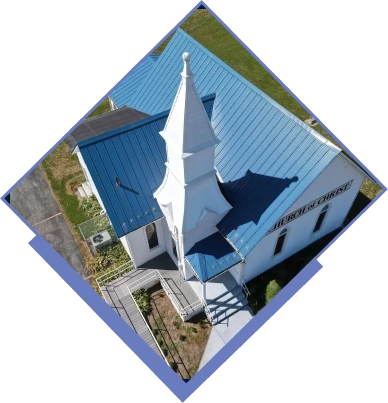








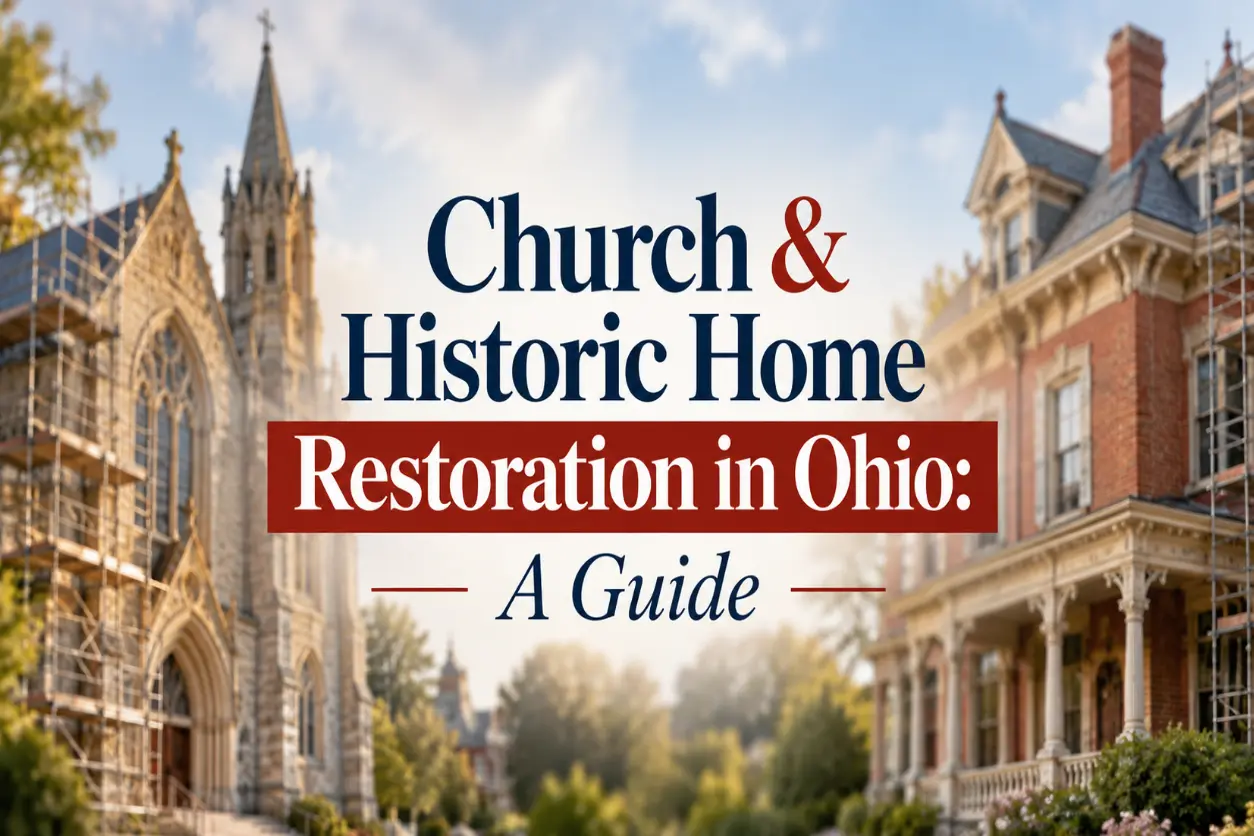
Ohio is full of buildings worth saving: brick churches with soaring steeples, century-old homes, town halls, and downtown storefronts that have anchored their communities for generations. Keeping them standing takes more than a patch and a coat of paint. Older buildings were built with different materials and methods, and the repairs that work on a modern building can quietly damage a historic one.
This guide explains what historic restoration involves, the problems we see most often in older Ohio buildings, how to plan a project, and what to look for in a contractor. If you own or manage a historic property, it should help you ask better questions and avoid costly mistakes.
What does historic restoration mean?
People use several terms for work on old buildings, and they are not interchangeable:
- Preservation focuses on maintaining a building as it is and slowing deterioration.
- Restoration returns a building, or part of it, to how it looked at a specific point in its history.
- Rehabilitation repairs and updates a building for modern use while keeping the features that give it character.
Most projects blend all three. A church might need its masonry restored, its roof repaired, and its interior updated for safety and accessibility, all without losing the details that make it special. Our historic restoration services are built around that balance: protecting original character while improving safety, stability, and function.
Common problems in older Ohio buildings
Ohio’s freeze-thaw cycles are hard on old structures. Water gets into small cracks, freezes, expands, and slowly widens the damage. These are the issues we see most often:
- Water intrusion from failing roofs, clogged gutters, bad flashing, or poor drainage around the foundation
- Deteriorated mortar and cracked or spalling brick and stone
- Settling foundations and weakened load-bearing walls
- Aging roof systems that have outlived their materials
- Layers of old paint, soot, and grime that hide the original surfaces
- Wood rot in trim, windows, porches, and framing
Most of these trace back to water. That is why restoration usually starts by finding and stopping the moisture source before anything cosmetic is touched.
Start with a thorough assessment
A good restoration project begins with a careful look at the whole building, not just the visible problem. A solid assessment should:
- Document existing conditions with photos and notes
- Identify the cause of each problem, not just the symptom
- Separate urgent safety and structural issues from cosmetic ones
- Flag original materials and features that should be protected
- Produce a prioritized plan that can be phased over time if the budget requires it
This step saves money. It keeps you from repainting a wall that will only fail again because water is still getting in behind it.
Structural restoration
A historic building is only worth restoring if it is sound. Structural work can include reinforcing aging foundations, repairing load-bearing walls, and stabilizing framing that has shifted over time. The goal is to improve safety and stability while keeping as much original fabric as possible.
When a project involves several trades at once, such as masonry, carpentry, roofing, and interior work, a single team that coordinates everything reduces handoffs and delays. That is where general contracting and our broader commercial construction experience come in.
Masonry restoration
Brick and stone are the backbone of many historic buildings, and they need specialized care. Two points matter most:
- Repointing with the right mortar. Mortar is meant to be the softer, sacrificial part of a masonry wall. Modern hard cement mortars can be stronger than old brick or stone, which can cause the masonry itself to crack and flake. Mortar should be matched to the original in strength, color, and joint style.
- Careful repair and replacement. Damaged units should be repaired where possible and replaced with closely matching materials only when necessary.
Aggressive cleaning is another common mistake. Harsh abrasive methods can strip away the protective surface of old brick and stone, speeding up future deterioration.
Roofing and water management
A roof is a historic building’s first line of defense. Slate, clay tile, metal, and older shingle systems each have their own needs, and a failing roof can undo every other repair in the building. Flashing, gutters, downspouts, and drainage deserve just as much attention, since water that sits against a foundation or soaks a wall is what starts most of the damage described above.
When a building needs more than patching, our roofing team can help evaluate what the roof needs while respecting the look of the building.
Gentle cleaning: removing paint, soot, and grime
Over the decades, historic surfaces collect paint, soot, and dirt. The challenge is removing it without harming the material underneath. This is where non-abrasive methods are valuable.
Dry ice blasting is often used to safely remove paint, soot, dirt, and surface contaminants from historic structures. It does not use water or abrasive media, and it leaves no blasting residue behind, which makes it a good fit for delicate or hard-to-clean surfaces. As with any method, a small test area first is the safest way to confirm the results before cleaning a whole facade.
Painting and finishes
Paint protects historic materials, but surface preparation and product choice matter. Old paint layers, especially on buildings constructed before 1978, may contain lead, so testing and safe handling are important, and lead-safe work practices may be required. Breathable coatings that suit the substrate, along with proper prep, help paint last and let the building shed moisture instead of trapping it.
Once repairs and cleaning are complete, professional painting brings the finished look together and protects the work for years.
Special considerations for church restoration
Churches are often the most recognizable buildings in a town, and they come with their own challenges:
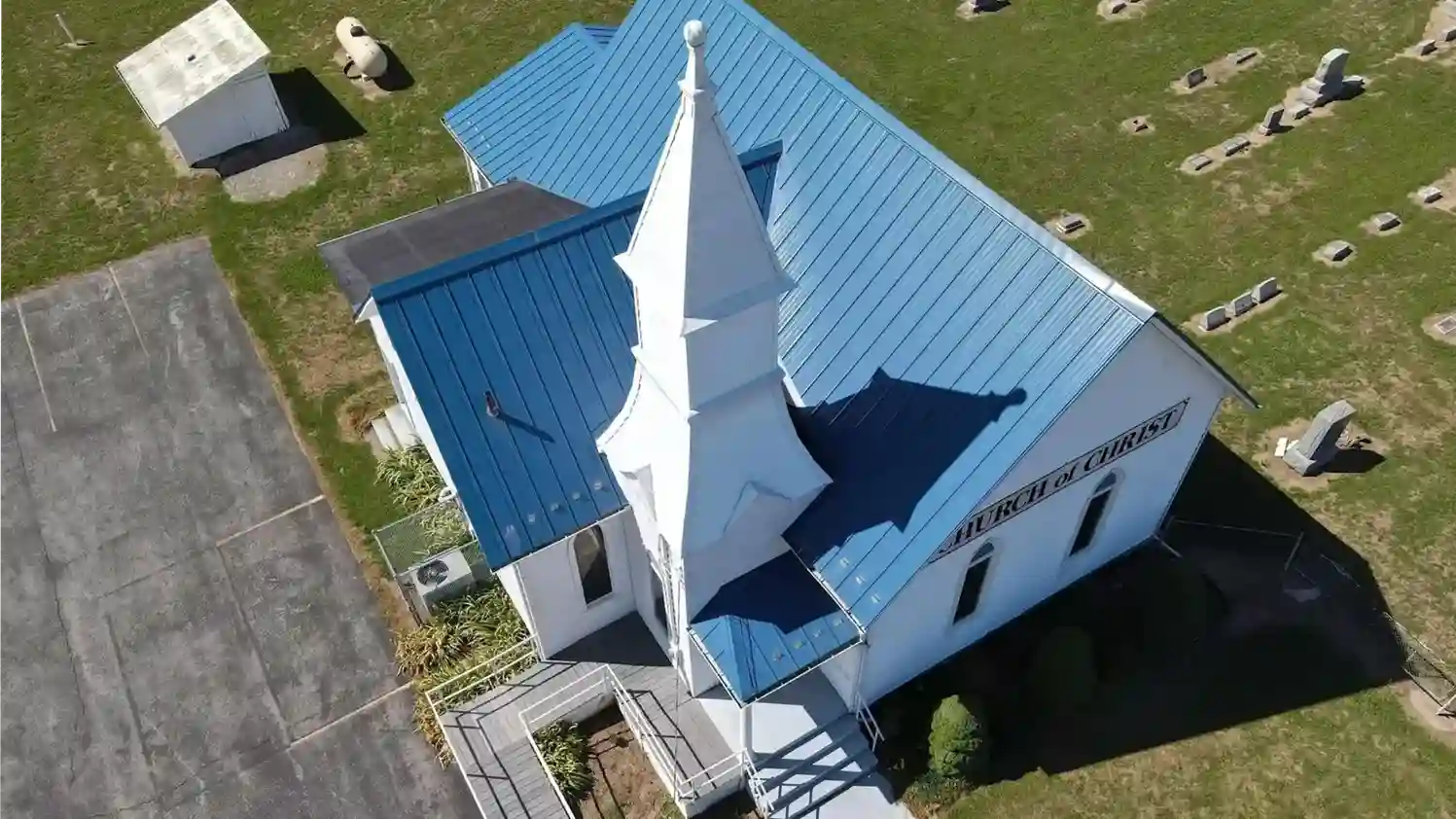
- Tall structures. Steeples, towers, and high rooflines require safe access and experienced crews.
- Large masonry surfaces and roof areas. Small problems can spread quickly if they are not addressed.
- Decorative and interior features. Plaster, woodwork, and finishes need careful handling.
- Scheduling around services and events. Good planning keeps the building usable while work is underway.
- Budgeting and phasing. Congregations often fund projects over time, so a phased plan that tackles the most urgent items first is common.
Our church restoration work covers structural repairs, masonry restoration, roofing improvements, interior restoration, and preservation, always with the goal of keeping the building safe, functional, and true to its history. You can see examples in our project gallery.
Planning, permits, and funding
Historic projects tend to involve more planning than standard repairs. A few things to check early:
- Local approvals. If your building sits in a historic district or is locally designated, exterior changes may need review before work begins.
- Building permits and inspections. Confirm what your city or county requires.
- Funding and tax incentives. Historic preservation tax credits and grants may be available for qualifying properties, and the rules change. The State Historic Preservation Office at the Ohio History Connection is a good place to ask what applies to your building.
- Phasing. Breaking the work into stages can make a large project more manageable financially.
If you are new to larger projects, our guide to planning a successful commercial renovation walks through the early steps, and our article on common delays in commercial construction explains what tends to throw schedules off.
What affects the cost of a historic restoration
Every historic building is different, so there is no standard price. The main cost factors are:
- The size and height of the building
- The extent of water damage and structural repair
- The type and amount of masonry work
- Roof type and condition
- Specialty materials that need to match original construction
- Access needs, such as scaffolding or lifts for tall structures
- Whether work is done in phases
- Permit and approval requirements
The most reliable way to get real numbers is an on-site assessment and a written, itemized estimate.
How to choose a historic restoration contractor
The contractor you choose can make the difference between a restoration that lasts and one that causes new problems. Look for:
- Experience with historic buildings, not just new construction
- A clear approach to protecting original materials and details
- A willingness to explain methods, such as which mortar they use and why
- Transparent quotes and clear communication
- Examples of similar completed projects
- A plan for scheduling around your use of the building
Our article on questions to ask before hiring a commercial contractor is a handy checklist, and you can learn more about our team on the about us page.
Historic restoration FAQs
What types of historic properties can be restored?
Historic homes, churches, municipal buildings, commercial properties, and other heritage structures can all be restored. Each project starts with an assessment of the building’s condition and goals.
Can a historic building be restored without changing its character?
Yes. A good restoration focuses on preserving architectural details, original materials, and historical integrity wherever possible, while improving safety and stability.
Is masonry restoration part of historic restoration?
Yes. Repairing brick, stone, and mortar is one of the most common parts of a historic project, and the right materials and methods are critical.
Is dry ice blasting safe for old buildings?
It is non-abrasive and is often used to remove paint, soot, and dirt from historic surfaces. A test area is the best way to confirm it suits your specific material.
How long does a restoration take?
It depends on the size of the building, the condition of the structure, and whether the work is phased. A contractor can give a realistic timeline after an on-site assessment.
Ready to protect your historic property?
Historic buildings are hard to replace, and the right restoration plan can keep them strong for generations. Explore our historic building restoration services to see what we offer, or request a free estimate and tell us about your project. You can also call (419) 443-0414 to talk it through with our team.